Attack on Foulksmills Barracks (Dec 1920)

At about 2:45 A.M on Saturday the 18th of December 1920 members of the south Wexford brigade IRA launched an attack on the R.I.C Barracks in Foulksmills, a small rural village located about 22km west of Wexford town.

The Barracks

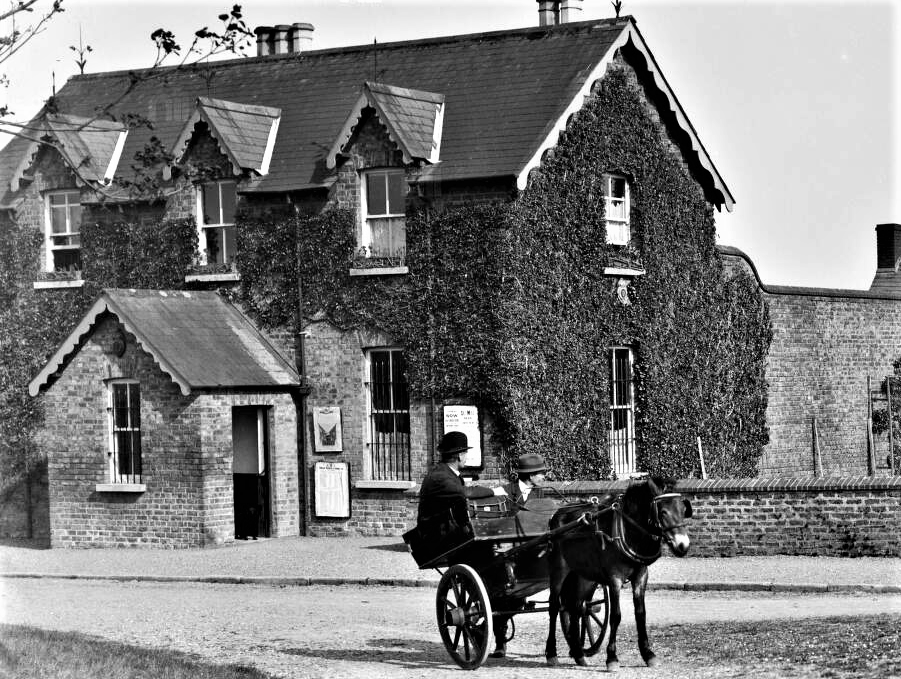
Picture of Foulksmills RIC barracks (right) following the attack. Note the Twomey household to the left of the barracks. (Credit Freemans Journal, 23rd December 1920)

Before describing the attack it is good to get an understanding of the building which was the target. Thomas Howlett of Campile, a member of the south Wexford Brigade IRA, in his witness statement to the Bureau of Military History gave the following description of the barracks.

‘Foulksmills R.I.C. barrack was a solidly constructed detached building, with a slated roof. It was about eight or ten feet from the side of the road. Dividing it from the road was a low wall, surmounted by a railing. In the center and projecting from the front of the building was an entrance porch. There were two windows in front, on the ground floor. These, of course, had steel shutters with loopholes. The barrack was of rather unusual design, as there were no front windows on the first floor; there was one window in each gable end, on the first floor. In the ground floor gable ends were loopholes but no windows. At the rear was a lean-to, extending ten to twelve feet from the main building. As part of the defensive arrangements, barbed wire had been placed on all sides of the barrack, from the eaves to the ground, and extending about eight feet from the base of the building. (p5-6)

By December 1920 many rural barracks in Wexford had been vacated by the police and were subsequently either damaged or burned by the IRA so they could not be reoccupied. Additionally, there had been an attack in April on Clonroche Barracks. This increase in hostilities towards the police led to any remaining barracks becoming fortified, as Foulksmills had become, with the addition of barbed wire and steel shutters.

The New Ross Standard reported that on the night of the attack the barracks was occupied by 2 sergeants and 7 constables. It would normally have been occupied by 15 men but on the night of the attack some were on leave or elsewhere. The garrison may have included several black and tans.

The Attack

1905 Ordinance Survey map with IRA positions depicted mentioned below. (Credit: wexfordwarofindependence. com)

The attack itself was carefully planned; to isolate the barracks and delay the arrival of any unwanted reinforcements approach roads into the village were blocked with trees and the telegraph wires cut. Motor cars had be taken for the operation also to transport items and act as getaway vehicles. The New Ross Standard reported around 100 men were involved while the official military report estimated about 70. The IRA were armed with shotguns and revolvers but had no rifles at the time. The objective of the attack was to blow a hole in the roof using a mine. Once this was done grenades and bottles of petrol could be thrown through it into the building, while at the same time constant gunfire would be placed on the barracks. To get the mine onto the roof a rope was to be thrown over the building, one end of which would then be tied onto the explosive device. The other free end would then be pulled, levering the mine onto the roof, where it would then be detonated.

One man was to be given the task of throwing the rope over the barracks. This had to be done on the first go as they could not afford multiply attempts as it could alert the garrison inside the barracks. To ensure success the first time round the man given the task trained throwing a rope over a building in preparation. However, when it came to the night he failed to turn up and could not be located, despite a visit even to his homeplace. Instead, in a change of plan, the barbed wire surrounding the barracks was cut and the mine placed against the rear of the building. Once it exploded the firing began; men armed with shotguns that had taken up position behind a wall across from the barracks opened fire on the building and the police responded with their own. They threw grenades and sent up verey lights to illuminate the night darkness as well, in some attempt to help locate the attackers. Additional bombs were thrown onto the roof together with bottles of petrol. Fortunately for the garrison inside many of these failed to go off. With the failure of the bombs and supplies of ammunition beginning to run short the attack was called off just before 4 A.M.

House Commandeered

The New Ross Standard reported that prior to the attack 3 men knocked on the house of ‘Richard Doyle’, who lived 50 yards from the barracks on the opposite side of the road. The House was commandeered by the men and Mr. Doyle and his wife and family went to the house of a ‘Annie Jones’ where they stayed until the following morning. It was suggested they may have used the upstairs window of the house as a vantage point to fire on the barracks.

The home of a ‘Mr. Twomey’, directly beside the barracks, had an adjoining yard were the IRA also took up position during the attack. Mr. Twomey was in his house together with his wife and six kids on the night of the attack and they had to seek shelter together in a single room.

The Aftermath

No casualties were reported on either side and the following morning the police captured a quantity of bombs, arms and a motor car. Thomas Howlett in his witness statement told how after the attack himself and others returned to their motorcar only to find it hemmed in between two barricades and with the road blocking parties gone home. It then had to be abandoned. Interestingly the New Ross Standard reported that a Mr. Matthew Hart from Campile was arrested and brought by the military to Waterford after his car was found ‘…on the side of the road near Foluksmills on Saturday morning following the attack’. This was the same car that had to be abandoned as Thomas mentioned how prior to the attack they commandeered Hart’s car to transport bombs and bottles of petrol.

The failure to capture the barracks is due to several factors. Firstly the individual trained to throw the rope over the building failed to show up which meant an abrupt change of plan was required. Secondly, many of the bombs used failed to go off and breach the roof. Thirdly and last is the lack of experience as pointed out by Thomas as he said ‘I believe that if we had even one man with experience in barrack attacks we could have captured the barracks that night.’ (p7).

Later Attacks

The Barrack was attacked again in March 1921 while a month later on the 13th of April an RIC constable on the road in front of the barracks was fired upon from behind gorse bushes 600 yards away. Fortunately his attackers missed and the bullets embedded themselves into the barracks walls instead.

Martin Walsh in his witness statement to the Bureau of Military History recalled another attack in May of 1921. Its purpose was to force the police to send up Verey light that would alert reinforcements which in turn would be ambushed by a newly formed battalion A.S.U. A landmine was placed against the barrack wall which exploded and was followed by shotgun fire on the fortified building. The police responded with their own fire and flung hand grenades outside. Unfortunately for the A.S.U the reinforcements arrived and left via a different route than the one set for the ambush and therefore they missed their opportunity.

The Site today.

Many of the physical elements associated with that nights attack no longer exist ; the Doyle and Twomey houses no longer remain, neither those the concrete wall which the men hide behind. However the barracks, which is now a private residence, still survives. It remains much the same as it would have looked in 1920. The building retains its gable end loopholes from the period. Bullet holes are also visible on the front wall associated with that nights attack in December 1920.

Foulkmills Barracks (Credit irishConstabulary.com)
Concrete Loophole visible in one of the gable ends. Making it easy to shoot out but difficult to shoot in

Sources

Bureau of Military History Witness Statement: Martin Walsh (IRA) #1495

Bureau of Military History Witness Statement: Thomas Howlett (IRA) #1429

New Ross Standard, Friday 24th December 1920, p4

Belfast Newsletter, April 15th 1921, p3

South Wexford Brigade Activity Reports
Attack on Carrig-On-Bannow Barracks results in Civilian Casualty

On Monday evening the 20th of December 1920 members of the South Wexford Brigade IRA arrived in the village of Carrig-On-Bannow, planning to destroy the RIC barracks. During the operation an altercation occurred between an IRA member and a civilian, the latter of whom was shot and killed.

Background to the event

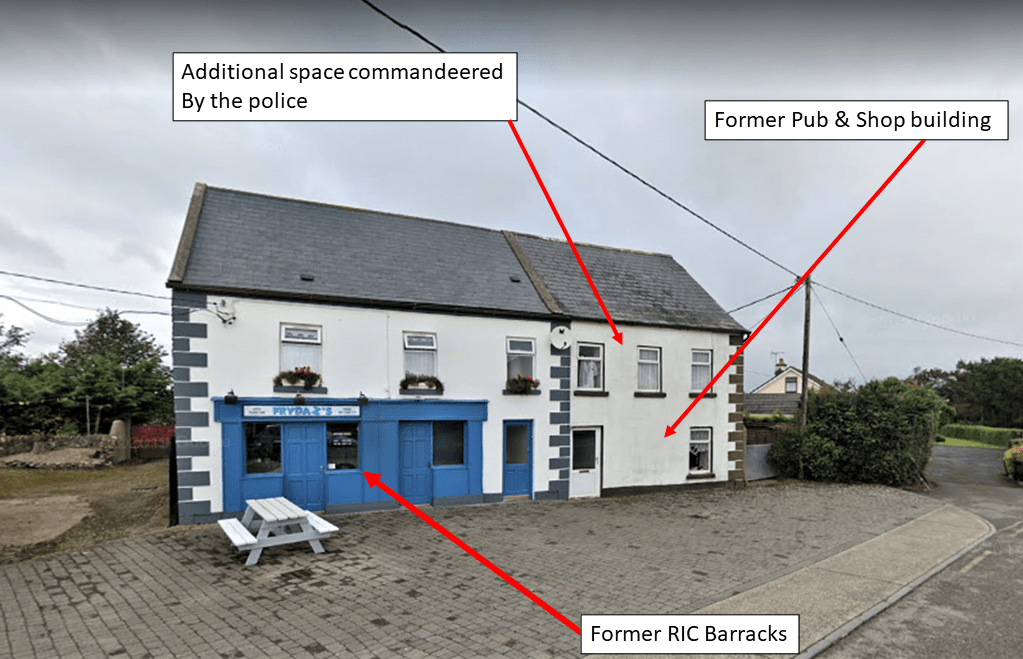
In December 1920 the South Wexford Brigade IRA planned to destroy the RIC Barracks in Carrig-On-Bannow. A shop and pub, belonging to a Mr. James Walsh, was attached to the barracks building. At the time the police had also commandeered the area above these to accommodate additional personal. Francis Carty in his witness statement describes how they had planned to ‘…place a large quantity of gelignite in the public house against the inner wall of the barracks. The charge was calculated to be sufficient to destroy the barracks and its contents completely.’ (p6). A man called Tom Traynor, whom was the county engineer, had calculated the amount of explosives required for the job.

The Barracks Building

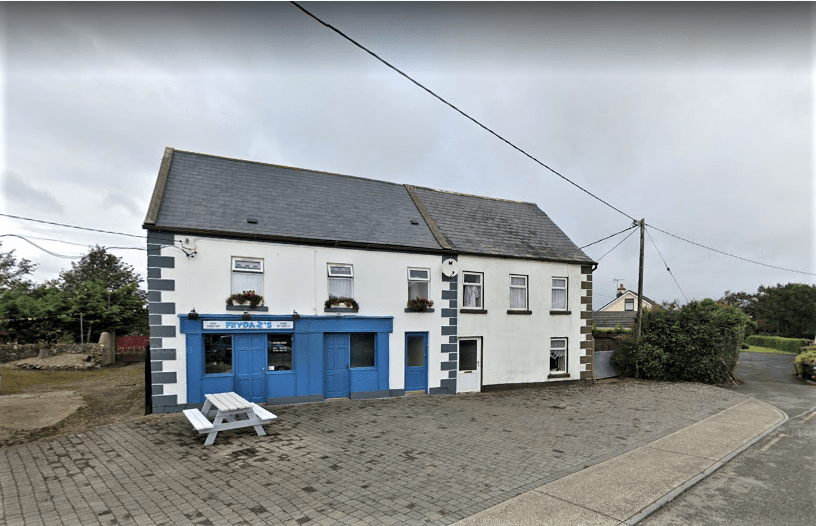
The old barracks in Carrig on Bannow as it looked in 2019. The shop and pub owned by Mr. Walsh, with their own separate entrances and signage, was the white building on the right. The police barracks occupied the adjoining building on the right and they additionally commandeered the space directly above the pub and shop in 1920. (Google Street View 2019)

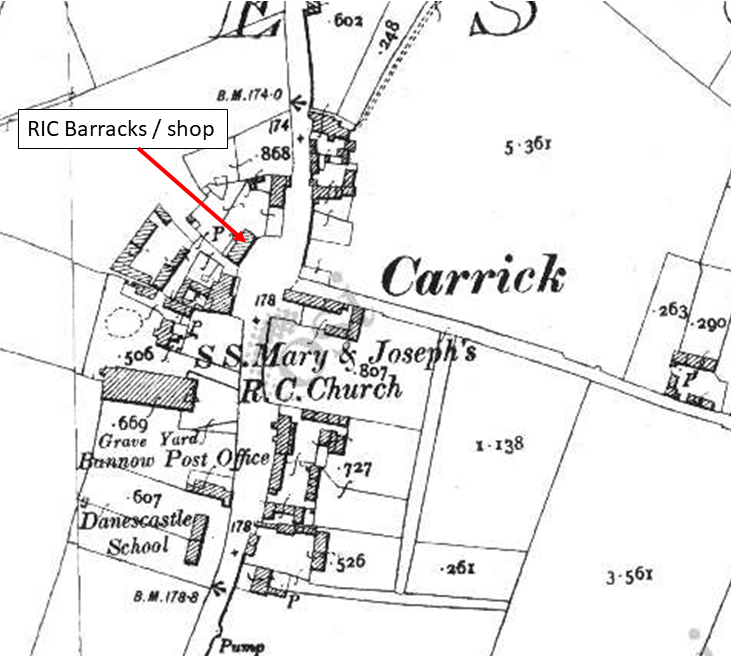
The RIC barracks was located on the northern end of the village, along the main street, The ‘Wicklow People’ on reporting the incident described the barracks as ‘strongly fortified and regarded as impregnable’. By Dec 1920 many rural barracks in Wexford had been sabotaged, burned or attacked. Foulksmills barracks had been attacked just 2 days before the incident in Carrig-on-Bannow. Subsequently as result of these events many had become heavily fortified, including Carrig-On-Bannow barracks. The newspaper report makes reference to ‘… a loophole window’ indicating the barracks possibly had steel shutters with loopholes attached to its windows. Mr. James Walsh, as well as owning the shop and pub, also owned the barracks building, which the police rented from him for a fee.

1905 Ordinance Survey Map of Carrig-On-Bannow Village with location of RIC barracks building marked.

Attempt to blow up barracks

Francis Carty states in his witness statement that 12 men were involved in the operation. Before the operation telegraph wires were cut to stop the police calling for aid and delay the arrival of any potential reinforcements. Explosives had been hidden in a graveyard near the village and were picked up en route on the day. At around 6 in the evening, under the cover of darkness, 2-3 cars arrived and stopped outside the village, having come from Wexford town. The IRA had been informed that Mr. Walsh would not be in the shop at the time and instead there would be a young man assisting him that would not offer any resistance. This was John Walsh, a nephew of James Walsh. A donkey and cart was commandeered from a man outside the village to place the explosives into. This was to be led up to the barracks and the explosives placed inside the adjoining shop. The ‘Wicklow People’ reported how two men, armed with revolvers, approached the owner of the donkey and cart and took it, but reasurred thrm that they would return it after the operation.

The Military Enquiry reported in ‘The Wicklow People’ told how John Walsh left the shop at about 6:45 p.m. after his uncle, James Walsh, had arrived and relieved him. It was unexpected to the IRA that James Walsh would arrive, but they decided to continue with the operation. At about 7 p.m. two men entered the premises. Francis Carty identifies one of these men as ‘Davy Sears’ and how when he attempted to buy cigarettes Mr. James Walsh became suspicious of him. The Enquiry told how after a brief exchange of words a struggle broke out between Davy Sears and James Walsh. The ensuing struggle escalated from the shop to just outside the property when two shots rang out and James was wounded. The IRA decided to abandon the operation and fled the scene, heading northwards out of the village. Meanwhile, upon being awoken by the noise one of the police officers in the adjacent barracks took position upstairs and fired two shots at a wall opposite the building on the other side of the street. Having heard the commotion he likely assumed the barracks was under attack and fired where he thought any attackers may have been positioned. Francis Carty describes how he had been observing the incident nearby and upon hearing the shots from the police intended to fire back with a ‘parrabellum pistol’ he had. However, he mistakenly pressed the magazine release and it with its store of bullets fell to the ground. These were later retrieved by the police.

Following the attackers retreat James Walsh lay wounded outside his store calling for his nephew saying ‘John I’m shot’. Twenty minutes later the parish priest, a Canon Mortimer O Sullivan administered the last rites (Irish Times, 22nd Dec 1920, p5) and within a half hour of the shooting James died (New Ross Standard, 21st Dec 1920, p5), The cause of death was given as a result of two bullet wounds, both shot at close range.

The Victim

Photo of Jim James Walsh (Courtesy of Anne Farrell, Carrig On Bannow)

James, most likely becoming aware of the IRA men and their intention, attempted to interfere and halt their actions. Knowing that the police were nearby he probably anticipated that his struggle would alert them and they would then render assistance. He was aged 50 years at the time of his death and was unmarried with no children. His remains were interned in Ambrosetown Graveyard.

Description of Mr. James Walsh (Wicklow People Newspaper, 23rd December 1920, P5)

Aftermath

Following on from the incident those involved managed to escape before any military cordons were set up on the area. They arrived back in Wexford town, leaving the cars a distance outside from it and walking in via separate roads. The Brigade Activity Reports tell how one telegraph wire was left uncut and the police actually wired for assistance. Fortunately for the IRA though a man named ‘Aidan Cullen’, whom was on duty in Wellingtonbridge post office, intercepted this message and prevented the capture of the men returning to Wexford.

The site today

The building has changed little from the exterior. The portion which served as James Walsh’s shop and pub is now a private residence. The former RIC Barracks was later used as the local Garda Station until the 1970s and in 2019 was used as a takeaway. There is no marker or memorial on the site to indicate that the incident ever occurred.

Sources

Irish Times, 22nd Dec 1920, p5

New Ross Standard, 21st Dec 1920, p5

South Wexford Brigade Activity Reports
The Wicklow People, 23rd Dec 1920, p5

Cover Photo: Former RIC Barrack (Left) and commercial premises of James Walsh (right) as it looked in 2019.

Policeman Shot in Bunclody

On Saturday the 22nd of December 1920 RIC constable William Jones was shot dead in Bunclody, (then called Newtownbarry)

Background

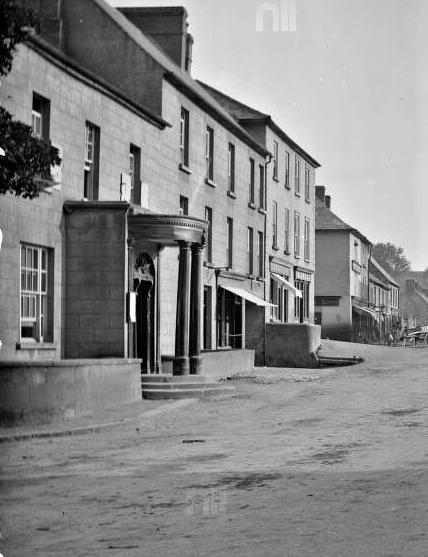
Shortly before 8p.m. at night constable Jones made his way towards the RIC barracks in Bunclody from the ‘Laundry House’, where his wife and child lived. The latter was located a short distance from the barracks on the opposite side of the river Slaney. Bunclody RIC barracks, were Jones was stationed, was a two story building located on the eastern side of the market square and the last building passed before crossing the bridge over the Slaney.

1905 Ordinance Survey map of Bunclody with the barracks marked. A is ‘The Laundry’ and B ‘Kellys pub’

Shortly after 8p.m. constable Jones and another officer left the barracks and made their way to the licensed premises of Maurice Kellys, located a short distance away on the street corner. A third officer, whom remained in the barracks, was feeling unwell and the others had gone to get their sick comrade a ‘stimulant’. Unusually, considering the times, Jones and the other officer both left the barracks unarmed, perhaps because they felt safe in the town of Bunclody.

Early 1900s photo of Bunclody RIC Barracks (Very left building with porch). Notice the RIC crest above the pillars and the steel shutters with gun loops on the two side upstairs windows. (Credit: National Library of Ireland, Laurence Collection). Kellys corner pub is also visible further up.
The former RIC barracks Bunclody as it looks today

While walking between the barracks and Kelly’s pub the officers spotted three men passing O’ Neills corner, on the opposite end of the street from Kelly’s, heading in the direction of Enniscorthy. Being somewhat suspicious of the men Jones made a remark to the other officer, but they both continued undistracted towards Kellys. When they got inside they ordered a whiskey, to take home to their sick friend back at the barracks, and two drinks for themselves. The two officers and a barmaid were the only people in the pub at the time. They made their way to an inner room with a fire for comfort.

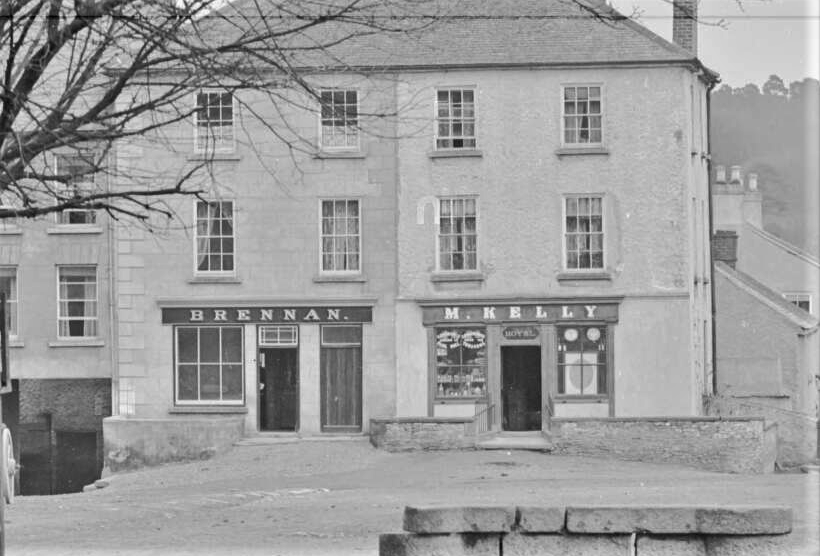
Early 1900s photo of Maurice Kellys licensed premised (right) where constable Jones was shot. (Credit: National Library of Ireland, Laurence Collection)
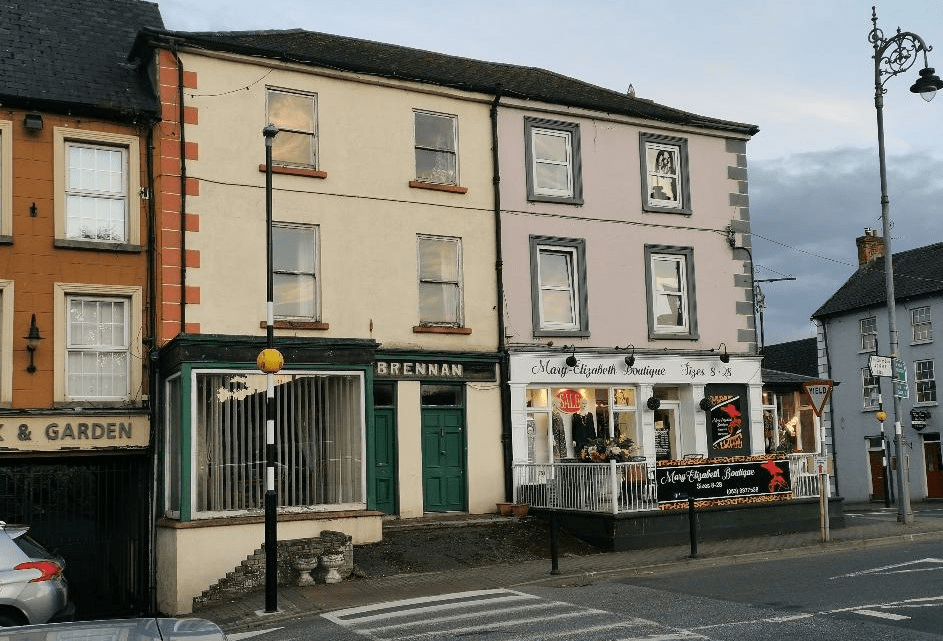
Mary Elizabeth Boutique now occupies the building that was once Maurice Kellys licensed premises.

While they were sitting comfortably at the fire the three men, which the officers had spotted earlier in the night, entered the pub. The officer accompanying Jones remarked that they looked like the men they had noticed earlier in the night. Being unfamiliar and suspicious of the three Jones decided to enquire as to who they were. He approached the men and spoke to them, when suddenly one raised his arm and fired a shot at his chest. The three men then quickly fled the pub. A Sergeant Torsney, upon hearing the shots from the barracks, arrived hastily on the scene, armed. But it was too late, as the strangers had made their escape. He found Jones lying in a pool of his own blood and the parish priest, Rev. A, Forrestal, was called and administered the last rites. A doctor arrived 15 minutes later, but by this time it was too late. The medical evidence showed Jones had been shot near the heart, rupturing a large blood vessel and would have died 60 seconds after being shot, which occurred at about 8:20p.m.

Constable Jones

Picture of constable William Jones in the Cork Examiner newspaper, 8th February 1921.

William Jones was a native of Castleconnell county Limerick and 35 years of age. He left behind a wife and three children, the youngest of which was 10 months. Newspaper reports refer to how he was known and got on well with the local community. He joined the RIC on the 1st of May 1907 and had been stationed in Enniscorthy before being transferred to Bunclody in 1918. Following the funeral he was interned in his native Castleconnell.

Circumstances surrounding the shooting.

Thomas Dwyer, in his witness statement to the bureau of military history, recalls how on the night of the incident the north Wexford brigade flying column was in Bunclody. They had no definitive plans, but were looking for a patrol of RIC within the town. After finding none they heard that Jones was drinking in Kellys pub. Two IRA men, Ned Murphy and Maurice Spillane, both armed, then went inside the premises. Jones, upon seeing the men enter the building, approached them when they opened fire and shot him dead. This suggests the shooting was opportunistic in nature, as they took the opportunity presented to them. They were looking for potential targets and Jones was in the wrong place at the wrong time. James O Toole in his witness statement states that the IRA had information that Jones had been providing intelligence to the RIC in Ballindaggin. This shows he was known to the IRA , and provides a possible motive for the killing.

The witness statement of Thomas Francis Meagher conflicts with that of Dwyer’s. He recalls how in preparation for an attack on Bunclody RIC barracks a party of men (including himself, Phil Lennon, Ned Murphy, Paddy Dwyer and Maurice Spillane) scouted the area, after which;

‘Having completed our reconnaissance, Ned Murphy went to Kelly’s public house, to see the local Intelligence Officer, who worked there, and to get information regarding the strength of the garrison, or any other information which might be of use to us. Constable Jones, R.I.C., was on the premises when Murphy entered. Jones approached Murphy, saying, “We are looking for you this long time”. Murphy fired at him and shot him dead. Phil and I heard the shooting and we ran towards the pub to see what was wrong. We met Ned coming out of the pub. He told us briefly what had happened. We made our way back to Cromogue and, with the rest of the Column, went to Tom Coady’s, Carrigeen.’ (p8)

Dwyer’s account suggests that Jones shooting was spontaneous, that they were unaware he was in Kelly’s pub and that Ned Kelly shot him in the heat of the moment.

The question posed from this discussion is whether the nature of Jones’ murder was opportunistic or instead spontaneous? Dwyer’s account suggests the first and James O Toole suggesting he was known to the IRA provides a possible motive. In contrast though Meagher suggests it was spontaneous in nature. The Enniscorthy Guardian in the opening few lines on the incident stated ‘The circumstances surrounding it are few and meagre. Judging by them the attack on the policeman’s life was not planned, but the act of a moments consideration.(p5). Conflicting accounts exist surrounding the exact details of that night and there is insufficient reliable evidence to ascertain the true nature of the incident. Some elements though hint that the shooting was spontaneous; the fact the shooter (or shooters) did not wear masks; that Jones was not shot until he approached them (or him); If they intended to kill Jones why not do so as he exited or approached the premises? The exact nature of the shooting of constable Jones in Bunclody 1920 may still remain unknown 100 years on from the event.

The site today

The RIC barracks in Bunclody is today a private residence but remains much the same as it did before. Maurice Kellys former premises is now a clothes shop and the building retains much of its original exterior appearance. No marker or memorial exists to commemorate the event.

Sources

Bureau of Military History Witness statement, James O Toole #1257

Bureau of Military History Witness statement, Thomas Dwyer #1198

Bureau of Military History Witness statement, Thomas Meagher # 1156

Enniscorthy Guardian, 1st January 1921, p4-5

North Wexford Brigade Activity Reports

Ballycanew RIC barracks sabotaged

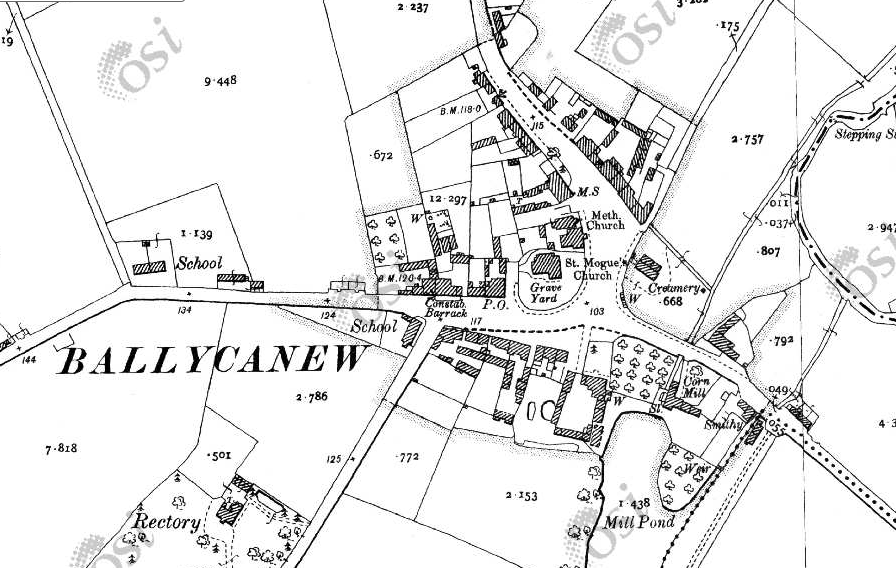
1905 ordinance survey map of Ballycanew village with location of the barracks visible opposite the school.

In the early morning of the 13th of May 1920 a dwelling house occupied by Henry Tomkins, which was formerly the village’s RIC barracks, was sabotaged. The Irish Times reported that 20 armed men gained entry into the premises, causing much destruction, breaking windows, doors, the stairway, ceilings and roof. A gun found inside was taken away also. Patrick Ronan in his witness statement to the bureau of military history states the Ferns company of the IRA were responsible.

Picture taken of the former barracks after it had been sabotaged. Note the holes in the roof and damage to the windows (Freemans Journal , 20th May, p6)

Ballycanew barracks had been vacated by the police for some time before the 13th of May. It was one of many vacated or closed barracks in the county that were burned or sabotaged so they could not be reoccupied. This reduced the capabilities of the British authorities in those areas, as they had now lost buildings in which they could have placed garrisons of men. It had the opposite effect for the IRA however as it allowed them more freedom to operate without a military or police presence in the area. Although Ballycanew barracks was closed the IRA were likely fearful that it maybe reoccupied by the newly arrived black and tans, brought in to reinforce the RIC.

Late 19th/early 20th century photo of Ballycanew Barracks (middle building with railings). Note the three police officers standing outside and the RIC emblem just visible above the front door. (Credit: National Library of Ireland, Laurence Collection)

The barracks building still stands in Ballycanew today and has remained much the same since the war of independence period.

The former RIC barracks in Ballycanew as it looks today (Google Street View)

Sources

Bureau of Military History Statement, Patrick Ronan #1157

Irish Times, 14th may 1920, p5

Hollyfort RIC barracks burned

On the 21st of August 1920 the RIC barracks in Hollyfort was burned by the Crannford company of the IRA. It had been vacated by the police earlier that month on the 14th and was one of many barracks burned or sabotaged in the county during the period to ensure it could not be reoccupied. This reduced the capacity of the British authorities to operate in the area, while increasing that of the IRA. The building had been let to the RIC for a yearly fee of £28 since 1892. After it was burned the owner was awarded £800 compensation.

1905 ordinance survey map with the RIC barracks marked, just south of Hollyfort village.

Sources

New Ross Standard, 22nd April 1921, p8

New Ross Standard, 29th April 1921, p6

North Wexford Brigade Activity Reports

Kilmuckridge RIC barracks burned

The former RIC barracks in Kilmuckridge as it looks today (Google Street View)

On the 14th of August 1920 the RIC barracks in Kilmucridge was burned by the Kilmuckridge company of the IRA. It had been vacated by the police earlier in the month. Laurence Redmond in his withnes statement describes the event as follows;

‘In August, 1920, the R.I.C. evacuated Kilmuckridge barracks. We got orders from Battalion Headquarters to destroy the building. On the 14th August Joe Quinsay, who was in charge, myself and five or six others at about midnight forced an entry into the barracks. We spread hay and anything that would burn and sprinkled it with paraffin oil, and then set fire to it. The barrack was completely destroyed’ (p5)

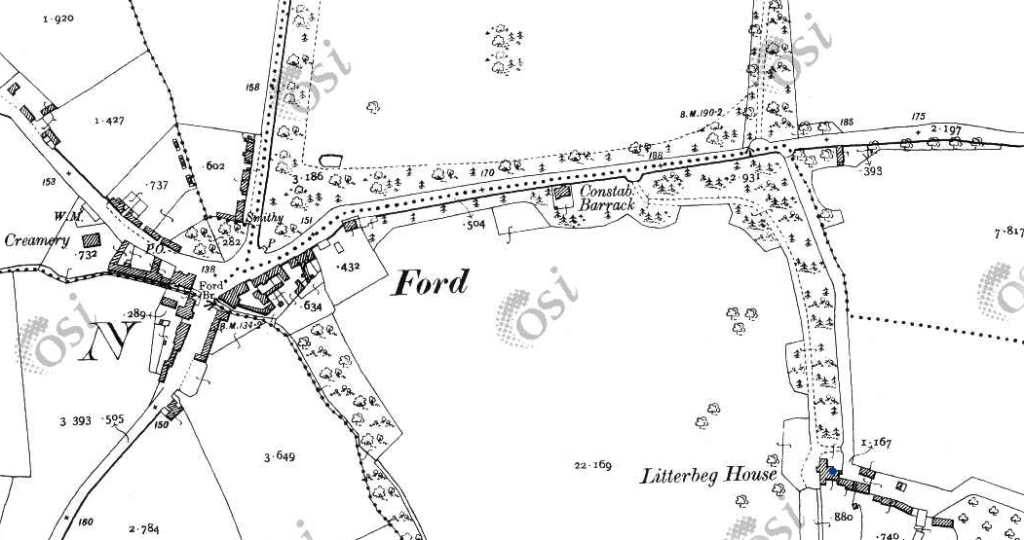
It was one of may barrcks burned or sabotage in the county to ensure ithey could not be reoccupied and reduced the capacity of the British authorities to operate in many areas, while allowing the IRA more freedom. The barracks was located near to and on the lands of Litterbeg House and the two likley had an association. This is a common theme regarding the location of many barracks at the time. The building was later rebuilt and today is a private residence.

1905 ordinance survey map of Kilmuckridge with barracks marked by ‘Constab Barrack’.

Sources

Bureau of Military History Witness Statement, Laurence Redmond #1010

Police held up near Rosslare

On the 18th of July 1920 the New Ross Standard reported that two police officers making their way from Rosslare towards Wexford town, at about nightfall, were stopped by four masked men and searched. It said the outcome of the search was unclear with some reporting that nothing in the way of firearms was discovered by the men while others alleged that the police were relieved of 2 revolvers. The south Wexford brigade activity reports state two revolvers were taken in this instance but that only two IRA men were involved. Where exactly the occurrence took place is unsure but the activity reports state it was on the road from Rosslare to Killinick. The police were likely on route to Wexford via Killinick. Members of E company (Tagoat) were involved in the operation.

Sources

New Ross Standard, 23rd July 1920, p5

South Wexford Brigade Activity Report

Castlebridge Barracks Burned

On the 12th of May 1920 the Castlebridge company of the IRA sabotaged the RIC Barracks in the village which had been vacated previously by the police on the 14th of November 1919. The Irish Times reported that about midnight a party of men, numbering 20 upwards, entered the building and caused considerable damage; ‘doors and windows were broken, the partitions were demolished and a large portion of the roof was dismantled’ (The Irish Times , 14th May 1920 p5).

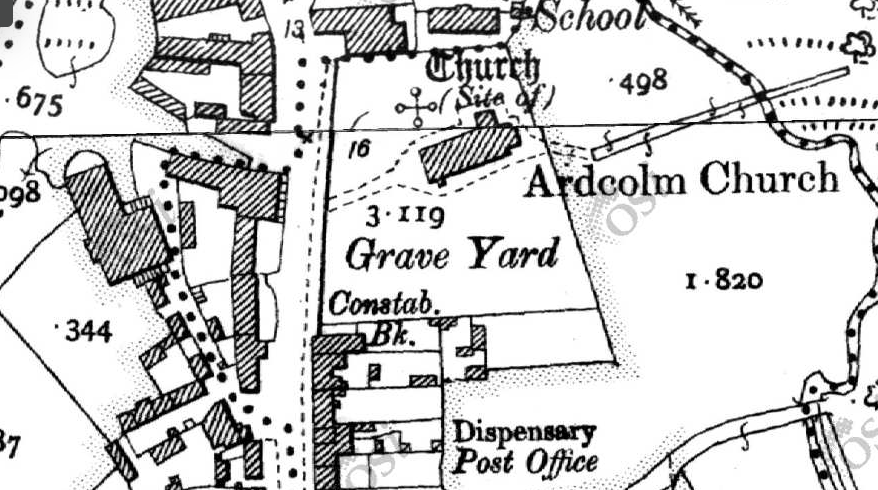
1905 Ordinance Survey Map of Castlebridge with location of RIC Barracks shown below church

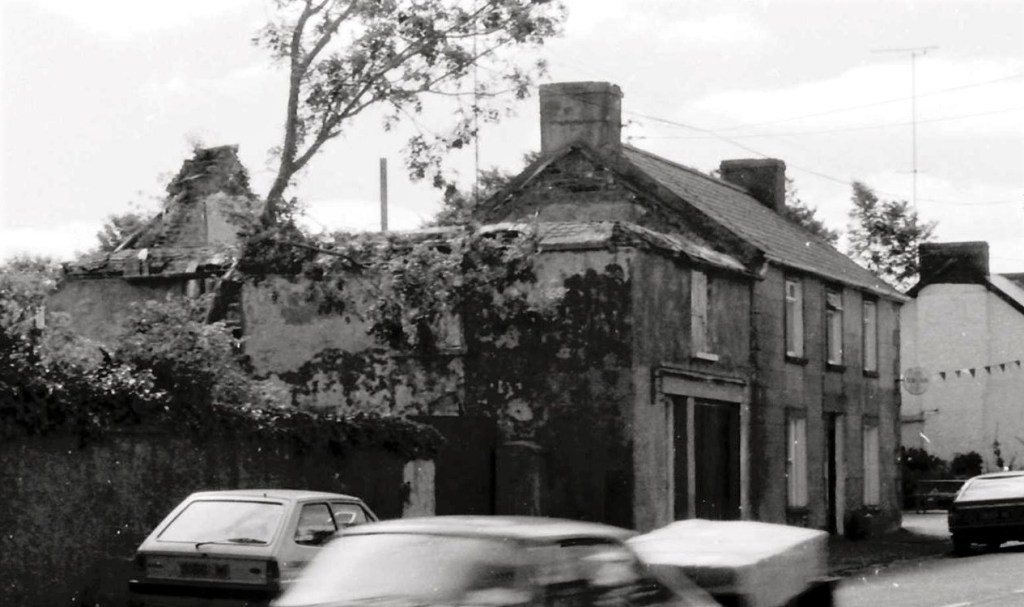
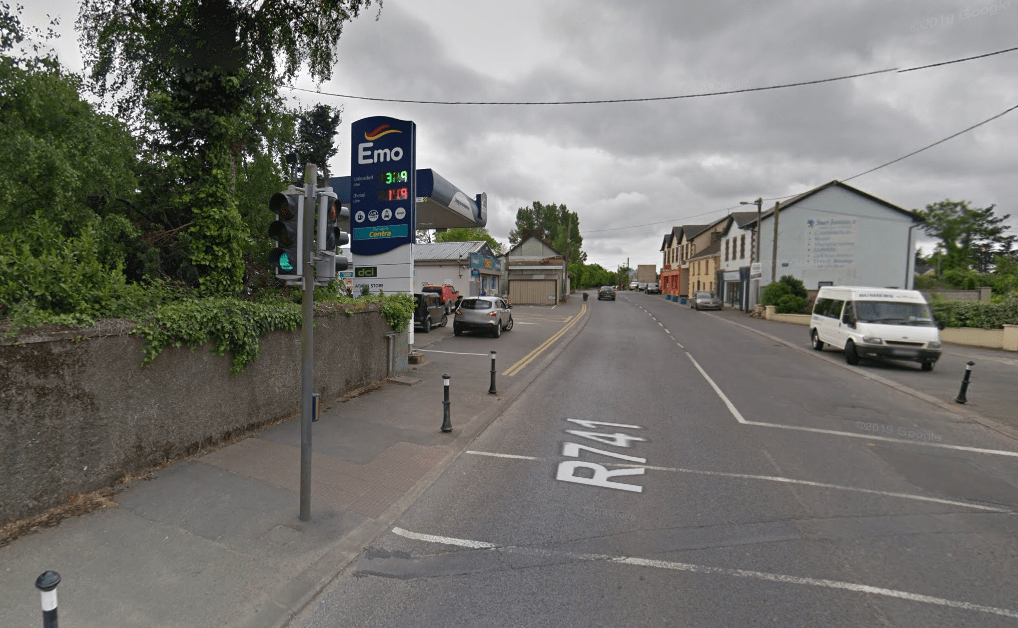
The building had been used as a police barracks since at least around 1839, being visible on the ordinance survey maps from then. It was rented from a Mrs. Jump, whom later was awarded £280 compensation in the courts. During the session a sergeant Cullen who gave details of the damage said ‘ The place was generally a wreck.’ (New Ross Standard, 23rd June 1920 p7). Today nothing remains of the former barracks with a petrol station now on the site. A photograph below, taken sometime presumably in the late 20th century, shows the building in a dilapidated state.

Picture showing the former barracks in Castlebridge located on the left with no roof. (Credit: Castlebridge memories facebook page)
Site of the former barracks at Castlebridge located were the petrol station now stands. (Google Street View 2017)

The Barrack was one of many sabotaged during the period in Wexford with the aim of ensuring they could not be reoccupied or used by the British authorities, therefore reducing their operational capacity, while increasing that of the IRA. Unlike most barracks Castlebridge was damaged rather then burned. Most likely because it formed part of a row of several buildings along the main street and the chances of a fire spreading to these would have been high. Consequently the barracks was heavily sabotaged instead.

Sources

New Ross Standard, 23rd June 1920 p7

South Wexford Brigade IRA Activity Reports

The Irish Times , 14th May 1920 p5

Wexford mans Body found in Rathanna

On Wednesday morning the 22nd of September 1920 men cutting corn on the land of Mr. James Joyce in Knockroe county Carlow, just over the border from County Wexford, discovered the body of a man. He was found facedown and covered over by a ‘few sheeves of corn’. Bullet wounds were noticed on the body and a rosary beads hung around the victims neck, as well as a placard with the words ‘Spies and Informers Beware.’

Map with x showing the approximate location of ‘Joyce’s Field’, where the body was discovered. The location has been described to this author as being ‘just up from Spearpoint, half ways between the bridge and the bend in the road’.

The victim

The body was identified as that of a James Doyle, aged 34 from Tomgarrow, Ballycarney Co. Wexford. He was originally a native of Templeshambo and during the World war worked as a munitions worker in Arklow and then England. At the time of his death he was emplyed as a farm laborer for a Mrs. Whitty of Ballycarney. He left behind a wife and 7 children, the youngest 4 months and the eldest 11 years old.

Circumstances surrounding the death

Contemporary Newspaper reports tell how on the night of Saturday the 19th of September 1920 James returned to his home from the mission mass in Castledockrell church, conducted by the Redemptorist Fathers. He arrived at his house around 9 or 10 o clock at night and about 11 o clock a knock was heard at the door. The Newspaper and witness statement accounts to the Bureau of Military History vary as to the what occurred next( i.e. number of persons present, who answered the door etc.). However, they all suggest that strangers arrived at the house dressed in some sort of military uniform and that a conversation took place between them and James Doyle, after which he got his coat and left ‘willingly ‘ with the men, for what his wife understood would only be a ‘brief period’. Reference is also made that the men arrived in motorcars. James would not return that night and several days would pass until his body was identified in a field in Knockroe. At the inquest the Irish Times (2nd, Oct, 1920, pg3) reported ‘…the medical evidence went to show that two bullet holes were found in the head, with one near the heart and another in the right side.’

Sean Whelan, in his witness statement to the bureau of military history. tells how he intercepted a letter addressed to British troops stationed in Enniscorthy courthouse that provided information on the IRA. He was given the letter by a Michael Murphy whom told said it was written by James Doyle of Ballycarney. Whelan states he was unsure if the letter was signed and had forgot where Murphy had obtained it but goes on to tell how it was decided to set a trap for Doyle to investigate the matter further;

‘I decided to set a trap for Doyle, and I asked Tom Roche, saddler, Templeshannon, and my brother Jem (James) to spring it .Sometime previously, we had captured British army officer’s uniforms in raid for arms on a loyalist house. We dressed Tom and Jem (James) in the uniforms and we started off for Doyle’s house.’ (p20-21)

Sean Whelan’s account together with that of Patrick Doyle and Michael Kirwan tell how Doyle led the ‘soldiers’ around the area, telling them what he knew of IRA men in the locality. At some point in the night Thomas and James identified themselves as IRA men to Doyle and he was then taken prisoner. Where he was taken is unclear; Patrick Doyle tells how

‘He (James Doyle) brought them (IRA men disguised as British officers) to Kehoe’s of Curraduff where the soldiers let him know they were IRA men. He was then held here and after a day or two he was tried by court-martial. (p8).

In contrast to this though Sean Whelan told how ‘Doyle told all he knew about the area and the volunteers, as he walked along the road in the moonlight towards Ballyhamilton‘ (p21). After Doyle had revealed all he knew the IRA men identified themselves to him and he collapsed after which they had difficulty in ‘…getting him along the road to Ballindaggin where we imprisoned him in an out house on a farm of – I have forgotten the name’.

Both accounts differ in the location as to where the men revealed themselves and where subsequently Doyle was kept. Ballyhamilton, near Ballindaggin, is several miles away from Curraduff. However, location near Ballindaggin would seem most likely, being within closer proximity to knockroe. Sean Whelan goes on to tell how James Doyle was court-martialed and sentenced to death. Phil lennon the brigade O/C presided at the court-martial. A Fr. Aidan McCormack from Kiltealy came to hear James Doyles confession before his execution.

The stretch of road where the body of James Doyle was found, looking east back towards spearpoint bridge with Knockroe visible in the left background. Joyce’s field would have been somewhere on the left.

The Execution

Sometime between his disappearance on the 19th of September and the discovery of his body on the 22nd he was taken and shot. The exact location of his execution is unknown but the witness statements refer to how it took place just over the Carlow border in the Knockroe. Patrick Doyle states: ‘Doyle’ was executed in county Carlow just across the Wexford border’ (p9). The townland of Knockroe takes in the northern part of the Scullogue gap, a well travelled pass between the Blackstairs mountains, connecting Carlow and Wexford. A large portion of the townland is made up of rural isolated mountain side, which would have been suitable for an execution. It is not known who carried it out but in the recently published book ‘The Dead of the Irish Revoloution’ James Whelan told the Irish Pensions board tat he ‘was on the execution’ (p180). James Doyle’s body was then found in the same townland nearer the roadside, probably not too far from where he was shot. His remains were later interned in the Old graveyard in Templeshambo, on the opposite side of the river from the Church of Ireland. While a headstone belonging to a James Doyle exists in the graveyard it is from an earlier date. The final resting place of James Doyle is therefore most likely unmarked somewhere within the graveyard walls.

A headstone belonging to another James Doyle (Tall stone on the left) in Templeshambo old graveyard.

Additional information

Newspaper accounts mention how on the same night that Doyle was taken from his home men dressed as British Soldiers, (likely the same that would later visited James Doyles), visited the homes of a Patrick Doyle of Ballinakill (James Doyle’s father in law). They asked if he had a son in the army, to which he replied yes but that he did not live there. The men took away a photo his son and then continued onto James Doyles, which was only a mile away.

Seamus Whelan in his statement describes an event the morning after Doyle’s execution which highlights the cruel nature of such an operation.

‘When I arrived home on the following morning I found Doyle’s wife seated in the kitchen, talking to my mother. She had come to ask me to help her find her husband who, she said, had been taken from his home two days previously by officers of the courthouse garrison. She had been to the courthouse and they denied all knowledge of her husband.(p22)

The family of James Doyle today maintain his innocence and that he was illiterate and therefore could not have written the letter supposedly from him to the British soldiers in Enniscorthy. Instead the letter is said to have been written by someone else, a woman, who forged it in his name.

Sources

Bureau of Military History Witness Statement: Michael Kirwan (IRA) #1175

Bureau of Military History Witness Statement: Sean Whelan (IRA) #1294

Bureau of Military History Witness Statement: Patrick Doyle (IRA) #1298

Irish Times, 2nd October 1920. p3

New Ross Standard, 24th September 1920. p5

New Ross Standard, 18th February 1921. p3

The Dead of the Irish Revoloution by Eunan O ‘Halpin and Daithi O Corrain, Yale University Press 2020

Wicklow People 2nd October 1920. p4

A special thanks is due to Patrick Quigley for helping to identify the location of ‘Joyce’s field’ near Knockroe.

Courtown Barracks Burned

The former RIC Barrcks in Courtown in the early 20th century. Note the bars on the lower windows and the RIC emblem above the window of the front porch. (Credit: The National Library of Ireland, The Laurence Collection*Image has been cropped from a larger photo for clarity. )

On Thursday morning the 22nd of April 1920, the R.I.C Barracks in Courtown was burned by the IRA. It had been vacated by the police a year previous. The Wicklow People Newspaper reported that thirteen men were estimated to have been involved and armed guards were placed within the village and on the approach roads. These were reported to have disappeared by 2 a.m. and two hours later the structure was burned down with ‘nothing remaining only the bare walls’ thereafter.  It was one of many, often rural, barracks burned in Wexford during the period to deny the authorities of their use and therefore allow the I.R.A more freedom to operate. Many of the barracks had been vacated by the police who were moved to more urban stations which were easier to defend. The Barracks was the property of the earl of Courtown whom after was awarded £1000 compensation (Irish Independent, 14th May 1920, p6). He later attempted to appeal this arguing for increased compensation, but the appeal was later withdrawn (Wicklow People, 2nd October 1920, P8). When the appeal was lodged originally in July Mr. Sheehan, the Inspector General, said amidst laughter they had not got enough! (New Ross Standard, 2nd July 1920, p1)

The Site Today

It is not known currently if the former barracks was ever rebuilt or whether it was demolished. The Courtown harbour hotel now stands on the site and the fabric of the original barracks maybe incorporated within this. The hotel has since closed.

The Courtown harbour hotel stand on the site of the former barracks. (Google Street View)

Sources

Irish Independent, 14th May 1920, p6

New Ross Standard, 2nd July 1920, p1

North Wexford Brigade Activity Reports
Wicklow People, 24th April 1920, P4

Wicklow People, 2nd October 1920, P8